
Important Notice About Jimmy Proof Locks (Rim Cylinder Type)
Screenshot
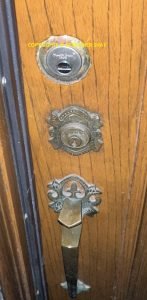
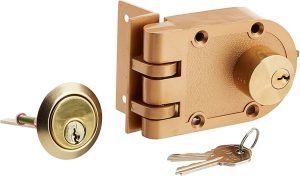
We’ve identified a common issue with Canstar, Maxtech, Northstar, USstar, Kenaurd, and other Mul-T-Lock–style look-alike Jimmy Proof locks that use rim cylinders.
Most jimmy proof locks produced since the 2000s are manufactured with brass internal components. These parts tend to wear and break over time, which can cause:
-
The outside rim cylinder to spin freely (turn empty)
-
Complete lock failure on both security and standard rim cylinder installations
Clarification on brands and quality
-
HALCO and ILCO jimmy proof locks break frequently due to weaker internal mechanisms
-
Yale produces higher-quality jimmy proof locks, but they are more expensive than standard options
Root cause of the problem
The issue is not with the rim cylinder or key section on the outside of the door.
The failure comes from the internal locking mechanism inside the door.
When a door is misaligned, users often need to pull or push the door for the pin to drop into the striker. If the pin does not drop cleanly, the mechanism binds. Over time, customers force the lock to engage, which leads to internal breakage and eventual cylinder failure.
 How to prevent lock damage
To avoid premature lock failure:
-
✅ Ensure the door and lock are perfectly aligned
-
✅ The pin must drop into the striker without any pressure on the door
-
❌ Do not force the lock if it feels tight or stuck
Correct alignment every time is essential to protect the internal mechanism and extend the life of the lock.
Call us 514-836-9097 or by email: info@serruriermontreal.com
⚠️ AVIS IMPORTANT – AVERTISSEMENT SUR LA DUPLICATION DE CLÉS
⚠️ IMPORTANT NOTICE – KEY DUPLICATION DISCLAIMER
All trademarks, brand names, and logos mentioned are the property of their respective owners.
No affiliation or endorsement is implied.
This information is provided for educational purposes only. 🛠️📖
Toutes les marques de commerce, noms de marques et logos mentionnés sont la propriété de leurs détenteurs respectifs.
Aucune affiliation ni approbation n’est impliquée.
Ces informations sont fournies à des fins éducatives uniquement. 📘
🏢 We are an independent locksmith company based in Montréal.
🏢 Nous sommes une entreprise de serrurerie indépendante basée à Montréal.
❌ We are NOT affiliated with / Nous ne sommes PAS affiliés à :
• CanStar
• Maxtech
• NorthStar
• UsStar
❌ We have no affiliation, partnership, or connection with any of the manufacturers listed above.
❌ Nous n’avons aucune affiliation, partenariat ou lien avec les fabricants mentionnés ci-dessus.
🔑 Our services are strictly limited to key duplication only.
🔑 Nos services sont strictement limités à la duplication de clés uniquement.
We do not manufacture keys, locks, cylinders, or security systems.
Nous ne fabriquons pas de clés, serrures, cylindres ou systèmes de sécurité.
📌 All brand names and trademarks mentioned remain the property of their respective owners and are used for identification purposes only.
📌 Tous les noms de marques et marques de commerce mentionnés demeurent la propriété de leurs détenteurs respectifs et sont utilisés uniquement à des fins d’identification.
✅ By requesting key duplication services, the client acknowledges and accepts this disclaimer.
✅ En demandant un service de duplication de clés, le client reconnaît et accepte cet avertissement.
